
English
Dear visitors,
If you have any questions, please feel free to contact sprengel-museum@hannover-stadt.de and +49 511 168-4 38 75.
We look forward to your visit!
CURRENT EXHIBITIONS
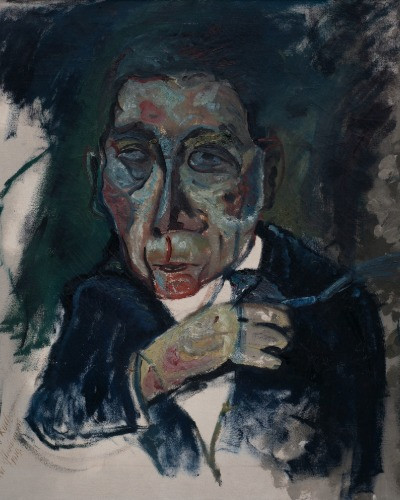
1.8. TO 1.11.26
Otto Gleichmann (Mainz 1887–1963 Hannover) moved to Hannover after the First World War, where he remained until his death. He is regarded as a major solitary figure among the younger generation of German Expressionists. Despite his considerable success during the 1910s and 1920s, he has since fallen largely into obscurity. This exhibition seeks to rediscover an important painter and draughtsman whose impact extended far beyond the city of Hannover.
Gleichmann’s oeuvre is marked by humanitarian pathos and profound sensitivity; his central subject is the human figure. His stylized, unmistakable faces with wide, cat-like eyes bear witness to the horrors of war he experienced firsthand. Enchanted, often otherworldly figures wander through densely populated urban spaces or appear in the lively environments of cabarets and circuses. Human relationships—solitude, proximity, and the complexities of social interaction—are explored in multifigural compositions imbued with psychological nuance. Throughout his career, Gleichmann focused predominantly on figural scenes in a wide range of configurations, complemented only occasionally by depictions of animals—especially cats and horses—by floral still lifes, and by a small number of landscapes.
The development of his motifs over nearly five decades can be traced with exceptional clarity: from the dark, suffering corporeality of his early Expressionist period, to a more relaxed and introspective calmness beginning in the mid-1920s, and ultimately to the luminous, lyrical, yet still subtly agitated touch of his postwar years. In these later works, nature and figure increasingly merge, arriving at a distinctly personal freedom of line, color, and light.
For the first time since 1987, this Hannover-based artist is being honored in a major retrospective, featuring approximately 180 loans as well as works from the Sprengel Museum’s own collection. A catalogue will accompany the exhibition.
Curated by Karin Orchard
Image: Otto Gleichmann, Porträt Hans Koch, 1919 | Öl auf Baumwolle, Höhe × Breite: 76,5 × 70 cm Sprengel Museum Hannover, Hannover
UPCOMING EXHIBITIONS
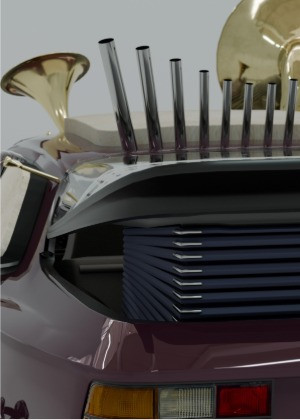
28.11.26 TO 21.2.27
Nevin Aladağ has been awarded the Kurt Schwitters Prize 2026 by the Lower Saxony Sparkassen Foundation. The prize, now being conferred for the fifteenth time, carries a monetary award of €30,000 and includes a comprehensive solo exhibition at the Sprengel Museum Hannover. The award ceremony will take place in autumn 2026.
Born in 1972 in Van, Turkey, Aladağ grew up in Stuttgart and studied sculpture with Olaf Metzel at the Academy of Fine Arts Munich from 1994 to 2000. She currently lives in Berlin and has held a professorship in “Sculpture in Motion” at the Hochschule für Bildende Künste Dresden since 2019. Nevin Aladağ works across media. Her practice encompasses sculpture, installations, collages, reliefs, video and sound works, as well as performances. Everyday objects, situations, and actions often serve as starting points for her work. She is interested in the cultural and political meanings embedded in the origins and histories of these objects. By removing them from their original contexts, she alters their interpretation and reveals their ideological and political connotations. Another central focus of her work is music, dance, and play as expressions of cultural identity. In projects such as The Music Room, presented in 2017 at documenta in Athens, she combines musical instruments from around the world into sculptural works, performances, and wall reliefs.
Aladağ achieved international recognition through her participation in documenta 14 (Athens and Kassel) and the 57th Venice Biennale (2017). Her work has been presented in numerous solo exhibitions worldwide, including at the Max Ernst Museum Brühl (2024), as well as in Seoul, Munich, London, San Francisco, Hannover, Dresden, Linz, Basel, Berlin, and Istanbul.
KURT SCHWITTERS PRIZE OF THE LOWER SAXONY SPARKASSEN FOUNDATION
The Kurt Schwitters Prize aims to honor artists “whose work is distinguished by reference to Kurt Schwitters and is characterized by venturing into new areas of artistic form and imagination, or whose work contributes to the connection and integration of artistic disciplines.” The award is a key component of the Lower Saxony Sparkassen Foundation’s cultural support, which is marked by year-round engagement in the fields of visual arts, music, museums, and heritage preservation.
Curated by Stefan Gronert
Opening: 27.11.26, 7 p.m.
Image: Nevin Aladağ, Rendering, 2026
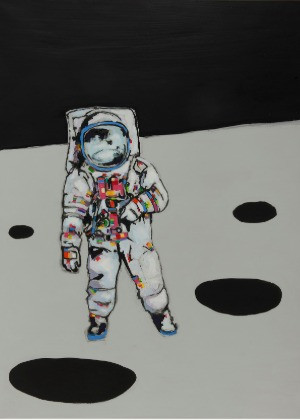
5.12.26 TO 7.2.27
Hannes Malte Mahler is an artist whose work is as colorful and multifaceted as his heraldic animal—the chameleon. The range of his work is enormous, spanning painting, drawing, and photography, as well as object and performance art, all the way to installations featuring—or lacking—“particles” made of Styrodur, doodles, and other trifles. Added to this are digital drawings that Mahler—exploring the tension between art and commerce—transferred onto colorful T-shirts and tote bags in one of his latest major projects under the title “Mahlerwear. It is art”. At the end of 2026, the Sprengel Museum Hannover will dedicate a comprehensive retrospective to Hannes Malte Mahler, honoring the versatility and uniqueness of his artistic work.
Curated by Reinhard Spieler
Opening: 1.12.26, 7 p.m.
Image: Hannes Malte Mahler, Ohne Titel (Der Astronaut), nicht datiert, 160 x 120 cm, Öl auf Leinwand, Foto Birgit Streicher
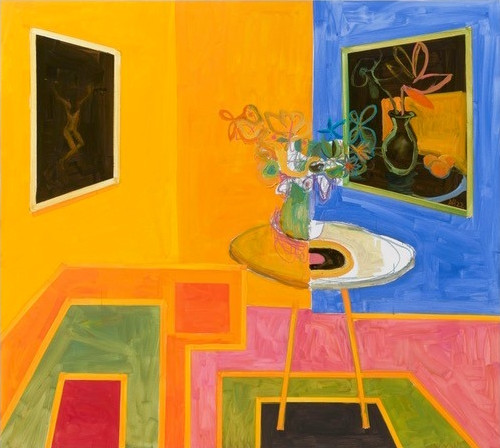
FROM 14.10.26
The Sprengel Museum Hannover is delighted to announce a generous donation: the artist Anton Henning has given the museum nine additional works. From 14 October 2026, the new acquisitions will be on view for the first time alongside works already in the collection.
Anton Henning works across painting, sculpture, and installation. His practice repeatedly brings together different visual worlds while questioning the boundaries between art and everyday life. The presentation in Sprengel Focus centres on a recurring motif in his work: spaces that cannot be clearly read as either interiors or exteriors. Interiors meet landscapes, architecture meets ornamental imagery, and the familiar encounters the deliberately disorienting. The result is a body of work in which it is not always clear where a space begins or where it ends.
Curated by Johanna Adam
Image: Interieur mit Blumenstilleben und Früchten, No.17, 2024, Öl auf Leinwand, 240 x 260 cm; © VG Bild-Kunst, Bonn 2026; Foto: Herling/Herling/Werner, Sprengel Museum Hannover
COLLECTION
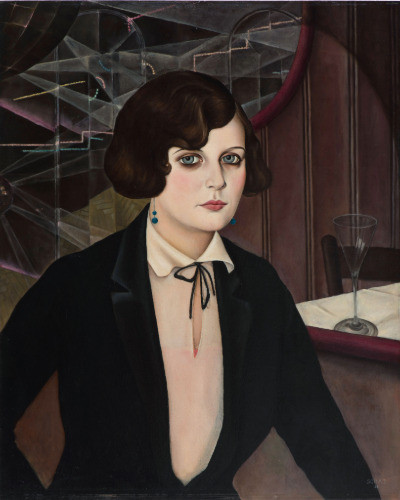
MEIN LIEBER SCHWAN!
DIE SAMMLUNG
FROM MAY 17th 2026
The Sprengel Museum Hannover shows a comprehensively reimagined presentation of its collection. Titled "Mein lieber Schwan!", the new display brings together more than 170 artistic positions from the 20th and 21st centuries across approximately 3,000 square metres and 20 newly designed galleries, creating unexpected encounters and fresh dialogues between artworks.
The presentation connects works of Classical Modernism with contemporary art, offering new perspectives on art history—not as a linear narrative, but as an open network of relationships, ruptures and rediscoveries. Highlights include major works by Max Beckmann, Pablo Picasso, Georg Baselitz, Isa Genzken, Hannah Höch, Bruce Nauman, Gerhard Richter, Karin Sander and Timm Ulrichs.
While the exhibition broadly follows a chronological structure, this narrative is repeatedly interrupted by thematic and aesthetic interventions. Familiar works are placed in unusual constellations, inviting visitors to experience art from new perspectives.
The title "Mein lieber Schwan!" (a German expression meaning "Good Gracious!"), borrowed from a work by Hanover-based artist Christiane Möbus, reflects the exhibition’s guiding principle: curiosity as a principle and surprise as a method.
Thematic sections range from the avant-gardes of modernism to questions of materiality, the body, memory and society, culminating in open-ended constellations of contemporary art. Works by Kurt Schwitters, Niki de Saint Phalle, Joseph Beuys, Thomas Schütte and Kader Attia open up diverse perspectives on art and its social significance.
The new collection presentation is accompanied by a newly developed educational programme featuring an audio guide, exhibition booklet and interactive formats such as the “Kritzelmobil”, which encourages visitors to explore the exhibition in a playful and experimental way.
To mark the opening on 17 May 2026, the museum will host a full-day programme of guided tours, workshops and special activities. The exhibition invites audiences to rediscover the collection as a space for questions, encounters and unexpected connections.
Curated by Inka Schube and Katharina Hermann
Image: Schad, Christian, Lotte (Die Berlinerin), 1927/28, Öl auf Holz, 66,2 × 54,5 cm, Sprengel Museum Hannover, Kunstbesitz der Landeshauptstadt Hannover; © VG Bild Kunst, Bonn 2026, Foto: Herling/Herling/Werner, Sprengel Museum Hannover
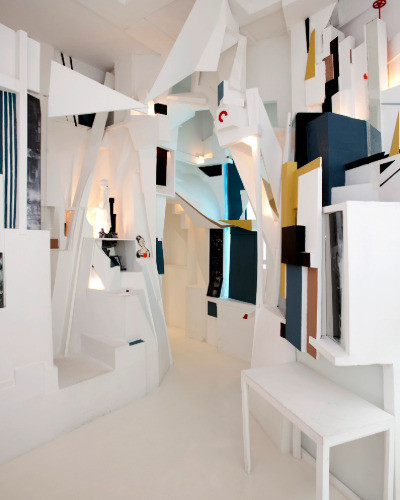
ABENTEUER ABSTRAKTION
FROM 23.4.23
In "Abenteuer Abstraktion", the Sprengel Museum Hannover is showing a significant part of its collection in the museum’s newly fitted rooms. The selection provides an overview of major manifestations and developments in non-representational art from the beginning of the 20th century to the present day. The starting point and focus of the tour are the reconstructions of El Lissitzky’s Cabinet of the Abstract (1927) and Kurt Schwitters’ Merz Construction (1933). Both rooms, which previously existed in Hannover, embody influential stages in abstract art and allow the visitor to directly experience the interplay of colour and form.
In addition to outstanding works by Schwitters and Lissitzky, Classical Modernism is represented by works by Piet Mondrian, Hans Arp and Paul Klee, among others. From the post-war period are works by, among others, Willi Baumeister, Pierre Soulages and K.O. Götz. These lead on to contemporary artists, such as Pia Fries, Pipilotti Rist and Wolfgang Tillmans. Awaiting discovery in the 18 rooms of "The Adventure of Abstraction" are cabinet of graphic works, expansive media artworks and abstract films from the early days of the medium.
Image: Reconstruction of Kurt Schwitters' Merzbau, Photo: Herling/Herling/Werner, Sprengel Museum Hannover
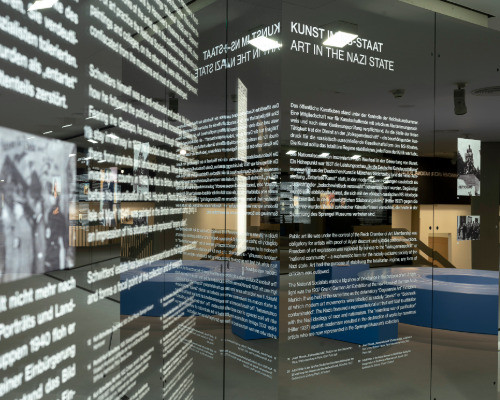
ARTISTS IN HANNOVER UNDER NATIONAL SOCIALISM
FROM 23.4.23
On the museum’s mezzanine floor, another area opens up that takes a look at Hannover artists and art from 1933 to 1945. Taking nine people as examples and tracing historical events, the exhibition illuminates the situation of art and artists under National Socialism and asks how the political conditions impacted on the institutions and artists’ lives and work, museum staff and collectors. Finally, we investigate the extent to which the Nazi past continues to affect the museum to this day.
Image: Artists in Hannover under National Socialism, Photo: Herling/Herling/Werner, Sprengel Museum Hannover
ARCHIVE
1.7. TO 4.10.26
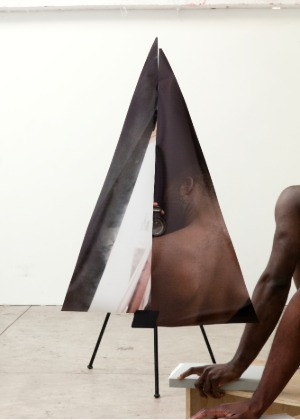
Paul Mpagi Sepuya (*1982, San Bernardino, California) is regarded as one of the most significant voices in contemporary photography in the United States. The exhibition at the Sprengel Museum Hannover marks the artist’s first major solo presentation at a German museum. It reveals how Sepuya, in his poetically composed works, deconstructs the conventions of classical portraiture, employing the camera as both an instrument and a subject, while simultaneously creating spaces of intimacy, fragmentation, and reflection. Through the deliberate use of mirrors, fabrics, and studio elements, Sepuya interrogates the mechanisms of looking—who observes, who is observed, and how photographic intimacy is constructed.
Sepuya’s practice is shaped by queer perspectives, a conscious engagement with visibility, and a profound examination of the photographic act itself. His images are not mere representations but performative processes—open, sensitive, and attentive to the power structures embedded in the medium.
Developed jointly by the Sprengel Museum Hannover and the Fotomuseum Winterthur (28 February–14 June 2026), the exhibition places Sepuya’s artistic, medial, and political concerns at its center—particularly his engagement with Blackness, the body, and spatiality. The artist himself describes his aims as “thinking anew about the structures of photography, portraiture, and queer sociality” and “recognizing the fundamental position of Blackness as material—or Blackness and darkness as a place from which and into which one looks” (Paul Sepuya).
Curated by Stefan Gronert
Image: Paul Mpagi Sepuya, Mirror Study (0X5A7394), Archival pigment print, 2017 © Paul Mpagi Sepuya
13.6. TO 27.9.26
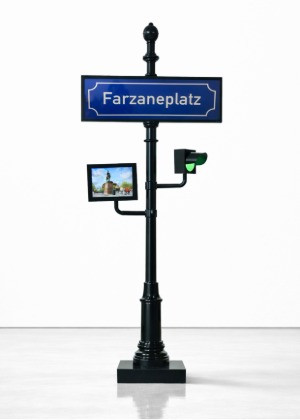
The “Hannes Malte Mahler Art Prize – it is art®” is awarded every four years by the non-profit association feinkunst e.V. in cooperation with the Sprengel Museum Hannover. Established in 2020, the prize commemorates the Hanover-based artist Hannes Malte Mahler (1968–2016), who died tragically in 2016 and was a master student of Marina Abramović. With prize money of 15,000 euros as well as a project and production budget of up to 105,000 euros, it is one of the most highly endowed art prizes in Germany. The funding is aimed at both emerging and established artists and includes an invitation to realize a project in the urban space of Hanover as well as in the premises of feinkunst e.V. and the Sprengel Museum Hannover.
The recipient of the “Hannes Malte Mahler Art Prize 2024 – it is art®” is the artist Farzane Vaziritabar, born in 1987 in Yazd, Iran. With her concept, Vaziritabar takes up Hanover’s well-known “Red Thread” — the circular route to the city’s landmarks — and reinterprets it through a wide range of artistic, media-based, and performative interventions. Her planned activities at a total of 38 locations range from sound works and performances to installations, sculptures, and video works, as well as interactive elements. In doing so, she opens up a broad field of contemporary artistic forms of expression while also engaging with socially relevant themes, particularly questions of fluid identities. The playful, humorous approach that characterizes her work shows a productive closeness to Hannes Malte Mahler’s artistic self-conception — without imitating him.
Image: Farzane Vaziritabar, Farzaneplatz, 2026
1.4. TO 20.9.26
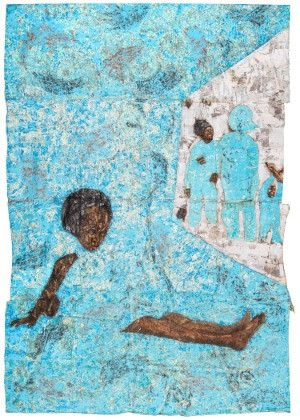
The Kenyan artist Kaloki Nyamai (born 1985 in Kitui) develops powerful visual worlds in his paintings and immersive installations, where traditional visual references intertwine with contemporary perspectives. Through multi-layered compositions and the intentional layering of shapes, symbols, and materials, Nyamai questions historical narratives and rewrites them from a distinctly present-day viewpoint. In the Calder Room of the Sprengel Museum Hannover, he presents three works that exemplify his artistic practice: they address issues of memory, cultural identity, and power, while simultaneously opening a dialogue between individual experience and collective history. The installation will open together with the exhibition "Horst Antes. A Collection." Kaloki Nyamai will be present.
Image: Kaloki Nyamai, Nikuonete Muno, 2024, mixed media, acrylic, collage stitching on canvas 626 x 416 cm; Courtesy Galerie Barbara Thumm, Foto: Jens Ziehe
11.4. TO 5.7.26
Horst Antes is considered one of the pioneers of New Figuration in Germany. His iconic “head-footers” (“Kopffüßler”), his consistent exploration of the human figure in space, and his house archetypes have brought him international recognition since the 1960s.
The exhibition offers a comprehensive insight into the artist's multifaceted body of work, ranging from early painterly experiments to later groups of works. At its core is the important collection bequeathed to the Sprengel Museum in 1988 by Wolf and Ursula Hermann and continuously expanded through the funds of their foundation. Today, it represents the most extensive public museum collection of works by Antes.
The exhibition features paintings, prints, and sculptures that vividly convey the quiet intensity, formal rigor, and lasting relevance of Antes’s visual language. All approximately 80 paintings from the collection are on display, spanning his artistic production from the early 1960s to the present day. The works have been arranged by Antes himself in a highly specific way, forming a kind of installation.
The presentation is complemented by the monumental seven-part sculptural ensemble Garden of the Seven Monuments of Pleasure, which Antes created for the Federal Garden Show in Karlsruhe in 1967 and which is now located in Aachen.
“Horst Antes. A Collection” will open together with an installation by Kaloki Nyamai.
Curated by Reinhard Spieler
Opening: 10.4.26, 7.00 p.m.
21.1. TO 17.5.26
Every year, the Lower Saxony Foundation honors a leading figure in the region’s art scene with a new volume in its “Contemporary Art” book series. The publications pay tribute to artists who, in most cases, can look back on distinguished careers and substantial bodies of work. Each selected artist is invited to shape and design their monograph according to their own vision. The release of every new volume is accompanied by an exhibition at the Sprengel Museum Hannover. In 2026, the established series will feature Gabriela Jolowicz, born in 1978.
Originally from Salzgitter, Gabriela Jolowicz is among the most significant voices in contemporary woodcut art in Germany. Her large-format black-and-white works transform everyday scenes into narratives rich in wit and nuance. Drawing on the history of the woodcut itself, she reinterprets historical models and brings them into the present. With her sharp eye for detail, Jolowicz counteracts today’s visual overload—revealing the unexpected depth that lies within the seemingly ordinary.
Curated by Stefan Gronert
Opening: 20.1.26, 6.30 pm
7.6. TO 18.7.26:
NEUER KUNSTCLUB III
The NEW ART CLUB is a meeting place for young people who enjoy looking at art and engaging in artistic practice. Since September 2023, the club has met on the first Tuesday of every month at 5 pm at the Sprengel Museum Hannover. For the third time, participants are presenting works created over the past weeks and months.
The “Kunstclub” was initiated by the participants themselves. Following the “Kunstsommer” – an annual week of art activities at the beginning of the summer holidays – they expressed a desire to visit the Sprengel Museum Hannover on a regular basis. Today, more than twenty young people come together in an ever-changing group to exchange ideas about art. The programme includes conversations with artists, practical workshops, exhibition visits and, above all, time to work on their own artistic projects.
This year, the NEW ART CLUB has chosen a construction-site wall in the SPRENGEL LOUNGE as its exhibition space. Made from OSB panels, the protective wall provides a dynamic backdrop for the diversity of the works: digital drawings meet acrylic paintings and collage; mobiles and pencil drawings are shown alongside works in ink. The themes range from political statements and the grotesque to dreamlike, fantastical moments and sheer joie de vivre.
The exhibition also features a collaborative work created in response to the exhibition “Gabriela Jolowicz. Holzschnitte – Woodcuts” (21 January to 17 May 2026), which provides a framework for the diverse works. Each participant designed a printing plate from craft foam, which was then used to print directly onto the construction-site wall.
With: Espen Adloff, Audrey, Theresa Brune, Leyla Ece Ceylan, Jette Dähnhardt, Ania Drescher, Kim Grochowski, Ayla Güdü, Ana Jahnke, Jeremy, Mareike Karkmann, Jay Lange-Osborne, Enie Lehning, Mary, Victoria Nguyen, Johanna Piper, Amelly Roest, Allegra Seifert, Christina Thies
Accompanied by: Theresia Stipp and Mareike Karkmann, Education and Outreach, Sprengel Museum Hannover
The exhibition offers a comprehensive insight into the artist's multifaceted body of work, ranging from early painterly experiments to later groups of works. At its core is the important collection bequeathed to the Sprengel Museum in 1988 by Wolf and Ursula Hermann and continuously expanded through the funds of their foundation. Today, it represents the most extensive public museum collection of works by Antes.
The exhibition features paintings, prints, and sculptures that vividly convey the quiet intensity, formal rigor, and lasting relevance of Antes’s visual language. All approximately 80 paintings from the collection are on display, spanning his artistic production from the early 1960s to the present day. The works have been arranged by Antes himself in a highly specific way, forming a kind of installation.
The presentation is complemented by the monumental seven-part sculptural ensemble Garden of the Seven Monuments of Pleasure, which Antes created for the Federal Garden Show in Karlsruhe in 1967 and which is now located in Aachen.
22.11.25 TO 1.3.26
Sven-Julien Kanclerski is the recipient of the SPRENGEL PRIZE 2025, awarded by the Lower Saxony Foundation for Savings Banks and the Lower Saxony Ministry of Science and Culture. The prize is awarded every two years to outstanding young artists from Lower Saxony and includes a travel grant intended to provide important impetus for cultural exchange in Europe.
In Romania, Kanclerski documented artefacts, traces and everyday situations. Although people often remain invisible in his works, their presence is always palpable. The project operates at the intersection of sculpture, ecology and everyday culture. Through photographs, installations and objects, Kanclerski explores how materials can take on new meanings and forms – oscillating between improvised functionality and poetic transformation. His works open up unfamiliar perspectives on everyday resources and reveal the multifaceted ways in which the relationship between people, materials and the urban landscape can be understood.
Curated by Nora Niefanger
18.4. TO 5.7.26
The artistic practice of Braunschweig-based artist Maja Zipf (*1998) is characterized by a resolutely multimedia approach. Working across ceramics, steel, wood, photography, and oil on canvas, she selects each medium with conceptual clarity and a keen sense for material expression. Her work is driven by a central question: how the relationship between humans and their environment might be reshaped in the future. In a time marked by the climate crisis, pressures of self-optimization, and the dynamics of global capitalism—conditions that often appear to leave little room for optimism—Zipf’s art seeks to open spaces for reflection and to encourage a renewed capacity for hope.
As part of the cooperative format Sprengel@feinkunst, the Sprengel Museum Hannover and feinkunst e.V. present a solo exhibition dedicated to the work of Maja Zipf.
Curated by Nora Niefanger
Opening: 17.4.26, 6.00 p.m.
At feinkunst e.V. (Rocherstraße 5, 30161 Hannover)
21.5. TO 28.9.25
From September 2025 to February 2026, the Sprengel Museum is presenting the exhibition "Love you for infinity" – a major exhibition highlight that shows works by Niki de Saint Phalle together with works by Yayoi Kusama and Takashi Murakami for the first time. The occasion for this special show is the donation of over 400 works that Niki de Saint Phalle made to the Sprengel Museum in 2000. The exhibition ranges from Niki de Saint Phalle's "shooting pictures" and the famous "Nanas" to Kusama's immersive "Infinity Rooms" installations and Murakami's pop wallpaper. It combines painting, sculpture, installation and film.
Similarities as well as differences between the artistic styles are revealed in the synopsis. On over 2,000 square metres, surprising connections emerge between the large-format works: from exuberant joie de vivre to existential threats, from feminism and female self-assertion to male dominance.
"Love you for infinity" is the first exhibition to combine works by Niki de Saint Phalle with those of Japanese artists Yayoi Kusama (born 1929) and Takashi Murakami (born 1962). All three artists share an enthusiasm for colourful, expressive worlds of colour and forms. Their visual language transcends the boundaries of art, pop culture and commerce and deals with central themes such as art and consumption, life and death as well as sexuality and trauma – each work in its own way.
BACKGROUND
Niki de Saint Phalle achieved international fame with her Nana figures, which were first exhibited in public spaces in Hanover in 1974. Hotly debated at the time, the striking sculptures still characterize the cityscape today. These and other expansive sculptures and paintings articulate a particularly memorable, popular, colorful and life-affirming visual language that is also politically charged. The same can be said for Kusama's work. The situation is similar with Murakami, whose commercialized visual language has developed an unmistakable oeuvre with a high recognition factor: What colourful Nanas are to Niki de Saint Phalle, polka dots are to Yayoi Kusama and stylized colourful flowers in emoji-style are to Takashi Murakami.
Curated by Stefan Gronert, Reinhard Spieler, Nora Niefanger and Talia Walther
Opening: 5.9.25, 7.00 p.m.
22.10.25 TO 25.1.26
The exhibition presents for the first time the comprehensive visual work of the artist Käte Steinitz from five decades. Although Steinitz is known in the historiography of Hanover as an important figure in Kurt Schwitters' circle, her work as an artistic work has remained virtually unknown. Based on the (partial) artistic estate that her heirs donated to the Sprengel Museum Hannover from the USA in 2018, a retrospective is now being created that sheds light on Steinitz's multifaceted work as an artist, photographer and author. Around 150 works and 40 documents are on display in six rooms, tracing her life and work. The majority of the exhibited works, in particular her photographic works, some of which have only survived as negatives, have never been published before.
A monograph of the same name will be published in German and English by Hirmer Verlag.
Supported by the Ernst von Siemens Art Foundation
Curated by Isabel Schulz
Co-author of the monograph: Pauline Behrmann
Opening: 21.10.25, 6.30 pm
13.4.19 TO 26.10.25
To mark its 40th anniversary, the Sprengel Museum Hannover presents the exhibition ELEMENTARY PARTS in its Extension Building. What are the core components of an institution? What is art, what is it made of, what does it relate to, and what is it about? In ten thematic galleries, the Sprengel Museum Hannover examines itself as an institution and its collection through these fundamental questions.
What role does colour play as one of the basic building blocks of art? Which materials do artists use, and according to which principles of form and composition do they work? What forms of reality do works situated between conceptual art, abstraction and figuration refer to? Which themes and contents are significant, which stories are told, and how is history reflected in art? ELEMENTARY PARTS brings together more than 150 works from the 20th century and contemporary art, presenting an impressive range of forms of expression in painting, sculpture, graphic art, photography and film by artists including Max Beckmann, Louise Bourgeois, Grethe Jürgens, Niki de Saint Phalle, Pablo Picasso and Gerhard Richter.
The Sprengel Museum Hannover
On his 70th birthday, 17 April 1969, Bernhard Sprengel announced that he and his wife Margrit wished to donate their joint collection to the City of Hannover. Ten years later, the “Kunstmuseum Hannover mit Sammlung Sprengel” opened; in 1984, it was renamed the “Sprengel Museum Hannover”. A second phase of construction was completed in 1992, followed by an Extension Building in 2015.
The Sprengel Museum Hannover houses all works created after 1900 from the collections of the City of Hannover, the State of Lower Saxony and the Sprengel Collection. These are complemented by holdings from the Kurt and Ernst Schwitters Foundation, the Kurt Schwitters Archive, the Lower Saxony Foundation for Savings Banks, the Rudolf Jahns Foundation, the Bernhard Sprengel and Friends Foundation, the Hannover Re Foundation, the Fritz Behrens Foundation and various other foundations, held as permanent loans.
Curators: Reinhard Spieler and Stella Jaeger
15.6. TO 13.7.25: NEUER KUNSTCLUB II
The exhibition by our NEW ART CLUB presents works created during our meetings. References to graffiti and comics meet delicate drawings, expressive painting and sculpture. The works reveal the different interests in artistic media. We develop our themes and share what concerns us. Whether it is a journey, deep emotional worlds, literature or our environment – our visual languages are as diverse as we are.
We are the NEW ART CLUB: young people aged 15 and over who enjoy looking at art and making art themselves. Since September 2023, we have met on the first Tuesday of every month at 5 pm at the Sprengel Museum Hannover. In June 2024, we presented our work for the first time and opened our first exhibition as part of the “Night of Museums”. Since then, we have continued to look at and make art with great enthusiasm at the NEW ART CLUB – and now we are showing these works again!
We initiated the NEW ART CLUB ourselves. During the summer holiday programme “Kunstsommer”, we spent an intensive and inspiring time making art together and presenting our work alongside groups from other cultural institutions. The atmosphere was so inspiring that we wanted to visit the Sprengel Museum Hannover regularly. Over the two years that we have been meeting as the NEW ART CLUB to exchange ideas about art in an ever-changing group, we have grown: the Art Club now has a total of 40 members. A flexible community of young artists has emerged, where everyone is warmly welcome. Conversations with artists, practical workshops, exhibition visits and, above all, time to work on our own artistic projects make up the programme of our NEW ART CLUB.
At our meetings in the Forum of the Sprengel Museum Hannover, art comes alive. The NEW ART CLUB offers an opportunity to share our own art and the joy of creating it. Here, we experiment, discover new ideas and enjoy making art together. This means a great deal to us: it is an activity through which we find ourselves while at the same time connecting with one another. What makes the club special is that everyone takes part by their own choice: the voluntary participation of each individual member is what makes our meetings so valuable.
Some members of the NEW ART CLUB are currently undertaking voluntary service in the fields of culture or politics in Hannover. This year, I, Mareike Karkmann, am doing my voluntary service at the Sprengel Museum Hannover. This year's NEW ART CLUB exhibition is also my FSJ project. It was supported by the Landesvereinigung Kulturelle Jugendbildung Niedersachsen with funds from the Lower Saxony Savings Banks under the annual theme of the voluntary service programmes, “Haltung”.
For the NEW ART CLUB, the theme “Haltung” means finding support in art and supporting one another in the NEW ART CLUB. Creative work helps us endure difficult times and gives us moments to pause and reflect. For us, “Haltung” means holding on to our attitudes and feelings and expressing them meaningfully through art.
We want to show our creativity and make ourselves visible. We are the NEW ART CLUB, and we warmly invite you to discover our artistic perspectives. We are delighted to be able to present our second exhibition at the Sprengel Museum Hannover, in the Museumsstraße!
With: Theresa Brune, Leyla Ece Ceylan, Ania Drescher, Fabian Drescher, Eva Eröz, Priska Fleischer, Kim Grochowski, Sumea Hoxhaj, Jeremy, Mareike Karkmann, Jay Lange-Osborne, Madona Laze, Franziska Loskant, Jette Menz, Ayleen Müller, Lotus Nguyen, Johanna Piper, Kimberly Naomi Teaca Renghiuc, Matilda Scheele, Tuğba Şimşek, Ella Spilgies, Marlena Steinweg, Daniel Stetsovskiy, Moriz Wiechell and Dagma Wolff.
Accompanied by: Mareike Karkmann, Voluntary Social Year, Sprengel Museum Hannover
11.12.24 TO 9.3.25
Barbara Probst (*1964) devotes herself to radical constructions of the visible. Her work represents a form of photographic hyper-staging. In her large-format, multi-part images, she encourages viewers to engage with what is depicted both intellectually and sensually. "My work is about seeing and observing, about our perception – about how we see the world and how differently we perceive it," explains the artist, who initially studied sculpture. Her starting point is multiple perspectives on the same scene, which she captures and photographs simultaneously using various cameras. It becomes clear that "reality" can appear differently at the same time, and a scene can be understood in various ways if we – quite literally – change our point of view.
In cooperation with the Lucerne Art Museum.
Curated by Stefan Gronert.
5.7. TO 28.9.25
The exhibition “Stand up! Feminist Avant-Garde. Works from the SAMMLUNG VERBUND, Vienna” presents the radical feminist art movement of the 1970s. The international women artists shared a collective consciousness that, for the first time in the history of art, radically reassessed the “image of women” and turned to new forms of artistic expression such as photography, performance, film and video. Their works are provocative, poetic and ironic.
Gabriele Schor, founding director of the SAMMLUNG VERBUND, coined the term “Feminist Avant-Garde” to describe this feminist art movement and to highlight the pioneering achievements of these artists. The women artists called for issues such as pregnancy, marriage, the right to abortion, equal pay for equal work and violence against women to be brought into the public sphere. These are issues that remain highly relevant today.
21.5. TO 28.9.25
In 2023, the Niedersächsische Sparkassenstiftung acquired the 49-part series of drawings “Über das Sterben” by Peter Heber (*1956 in Süderbrarup, lives in Hannover) for its collection, which is housed at the Sprengel Museum Hannover. Created in 1993 over the course of three days following visits to his aunt’s deathbed, the drawings belong to a tradition of deathbed scenes that artists such as Claude Monet, Ferdinand Hodler and Michael Morgner have engaged with intensively.
A booklet will be published as part of the “Beiträge zur Sammlung” series.
Supported by the Niedersächsische Sparkassenstiftung.
5.4. TO 20.7.25
The Stiftung Niedersachsen is awarding the renowned SPECTRUM International Prize for Photography to Norwegian artist Frida Orupabo. The prize, endowed with €15,000, includes a solo exhibition at the Sprengel Museum Hannover as well as an accompanying publication. Bringing together 32 works, some of them large-scale, created between 2018 and 2024, the exhibition runs from 5 April to 20 July 2025. The award ceremony will take place on 4 April 2025 at 7 pm, together with the opening of the exhibition.
Frida Orupabo is receiving the award for her photographic collages, which address questions of identity, racism and gender, as well as the sexual exploitation and objectification of Black bodies, in a particularly powerful way.
SPECTRUM INTERNATIONALER PREIS FÜR FOTOGRAFIE DER STIFTUNG NIEDERSACHSEN
The Prize is awarded every two years by the Stiftung Niedersachsen. It honours outstanding contemporary photographic artists.
JURY
Lavinia Francke (Stiftung Niedersachsen), Gabriele Schor (SAMMLUNG VERBUND, Vienna), Inka Schube (Sprengel Museum Hannover), Christoph Wiesner (Director of the photography festival “Les Rencontres Internationales de la photographie d’Arles”), Franciska Zólyom (Director of the Galerie für Zeitgenössische Kunst (GfZK), Leipzig)
Supported by the Niedersächsische Sparkassenstiftung.
30.4. TO 13.7.25
With “Das Atelier als Gemeinschaft. #Wilderers”, the Sprengel Museum Hannover is initiating a two-part exhibition and education project with the Atelier Wilderers art workshop from Hildesheim and Atelier Geyso20 from Braunschweig. The second part of the exhibition presents works by the artists of the “#Wilderes” studio.
The Sprengel Museum Hannover has been working closely with the Atelier Wilderers art workshop for several years. Fifteen artists with disabilities present a vibrant new interpretation of the Stations of the Cross at the Sprengel Museum Hannover, offering insights into their individual artistic practices. The presentation is accompanied by an extensive programme of educational and outreach activities, in which the artists themselves participate.
Frida Orupabo is receiving the award for her photographic collages, which address questions of identity, racism and gender, as well as the sexual exploitation and objectification of Black bodies, in a particularly powerful way.
SPECTRUM International Prize for Photography of the Stiftung Niedersachsen
The SPECTRUM Prize is awarded every two years by the Stiftung Niedersachsen. It honours outstanding contemporary photographic artists.
JURY
Lavinia Francke (Stiftung Niedersachsen), Gabriele Schor (SAMMLUNG VERBUND, Vienna), Inka Schube (Sprengel Museum Hannover), Christoph Wiesner (Director of the photography festival “Les Rencontres Internationales de la photographie d’Arles”), Franciska Zólyom (Director of the Galerie für Zeitgenössische Kunst (GfZK), Leipzig)
Supported by the Niedersächsische Sparkassenstiftung.
22.2 TO 15.6.25
The comprehensive retrospective of Grethe Jürgens at the Sprengel Museum Hannover explores the work of an important representative of the New Objectivity movement of the 1920s. For the first time, the exhibition presents part of her estate, comprising more than 370 works from various periods of her artistic career. Marking the 2025 anniversary year of New Objectivity, the retrospective brings together around 150 works, complemented by numerous documents. The exhibition offers a rare opportunity to discover the full breadth of the work of Grethe Jürgens, an artist who for a long time remained in the shadow of other representatives of New Objectivity. The accompanying catalogue, published by Snoeck, features contributions by various authors that provide insights into her work and life and fully acknowledge her significance as an artist.
Career and Style
Born in Osnabrück in 1899, Jürgens began studying graphic art in Hannover, where she encountered artists who would later become known as the “New Objectivity in Hannover”. From an early stage, she devoted herself to distinctive portraits and urban landscapes. She later developed her characteristic visual language through matter-of-fact, detached depictions of workers and marginalised groups, characterised by sober realism and a cool, unemotional gaze. Her works are free from accusation or condemnation, yet attentively reveal social tensions and the challenges of life on the margins of society.
Career and Challenges
Jürgens’ artistic breakthrough came with her first exhibitions from 1928 onwards. She regularly participated in exhibitions in Hannover, and her works were acquired by public collections. After the National Socialists came to power, she was required to register with the Reich Chamber of Fine Arts, but she was not a member of the Nazi Party and her works escaped confiscation. She adapted to the changed circumstances, turning her attention to landscapes and plants and developing her style of “Unkrautmalerei” (“weed painting”), characterised by seemingly innocuous motifs from nature.
Her “Rubble Paintings”, created in the aftermath of the destruction of Hannover, are unique in their striking depiction of ruins and the beginnings of reconstruction. These works reflect both the horror of war and the hope of rebuilding. From the 1950s onwards, her reputation grew again, and she increasingly came to be recognised as an artist of New Objectivity. Jürgens subsequently moved towards abstract art, creating series such as the “Line Compositions” and the “Kaleidoscopes”. Yet her willingness to experiment remained undiminished well into old age, even as her work increasingly oscillated between abstraction and figurative motifs.
Supported by the Niedersächsische Sparkassenstiftung and Sparkasse Hannover
Curated by Karin Orchard
16.3. TO 10.4.25
The Vonovia Award for Photography was organized in a new format for its seventh edition; however, the theme remains the same: HOME. A jury selected a total of six candidates for a master class. The participants then developed works based on the theme of ZUHAUSE. In cooperation with the Marktkirche and the Sprengel Museum Hannover, the works will be presented from March 16 to April 13, 2025, in the outdoor space in front of and inside the Marktkirche Hannover.
The exhibition features works by Jakob Eckstein, Natalie Kepesz, Klara Meinhardt, Marlene Plau, Sibylle Fendt, and Christian Heymann.
Curated by Reinhard Spieler, Director Sprengel Museum Hannover
Supported by the Niedersächsische Sparkassenstiftung and the Sparkasse Hannover.
22.1. TO 6.4.25
With “Das Atelier als Gemeinschaft. #GEYSO20”, the Sprengel Museum Hannover is initiating a two-part exhibition and education project with Atelier Geyso20 from Braunschweig and the Atelier Wilderers art workshop from Hildesheim. The first part of the exhibition presents works by the artists of the “#Geyso20” studio.
The studio is conceived as a nucleus of artistic creation and a place of community. Forty-two artists with disabilities present their work in an exhibition space modelled on the environment of their studio. The presentation is accompanied by an extensive programme of educational and outreach activities, in which the artists themselves participate.
Curated by Nora Niefanger, Kristina Sinn and Dörte Wiegand
15.2. TO 13.4.25
Social and individual reflection converge in the work of Lillien Grupe (*1997) in a visual language shaped by realism. The painter, who lives and works in Lower Saxony, draws her themes from a critical engagement with a society characterised by rapid change and an ever-accelerating pace of life. Her subjects revolve around emotionality, subjectivity and objectivity, as well as control and freedom, ultimately leading to the question: What is reality?
As part of the collaborative format Sprengel@feinkunst, the Sprengel Museum Hannover and feinkunst e.V. present the artist in a solo exhibition encompassing her painterly work of recent years.
Curated by Katharina Herrmann
